Preloader

Performance & Injury Prevention

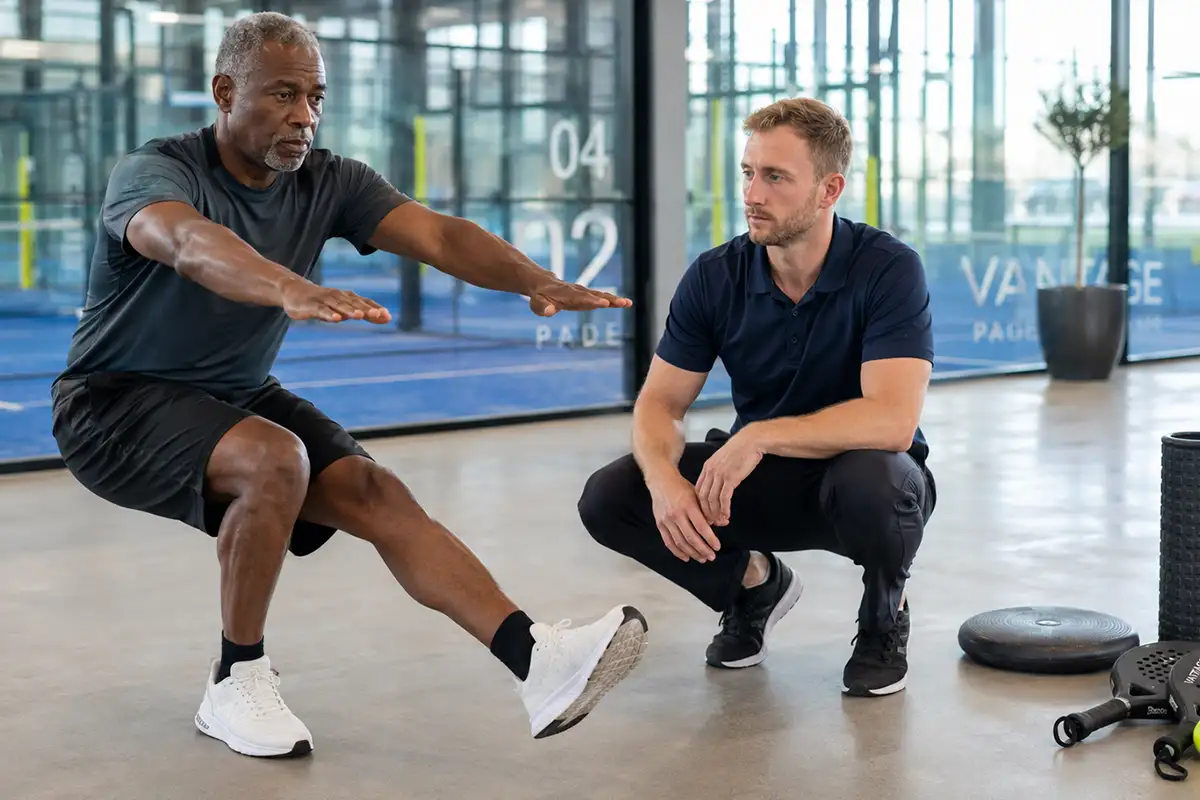
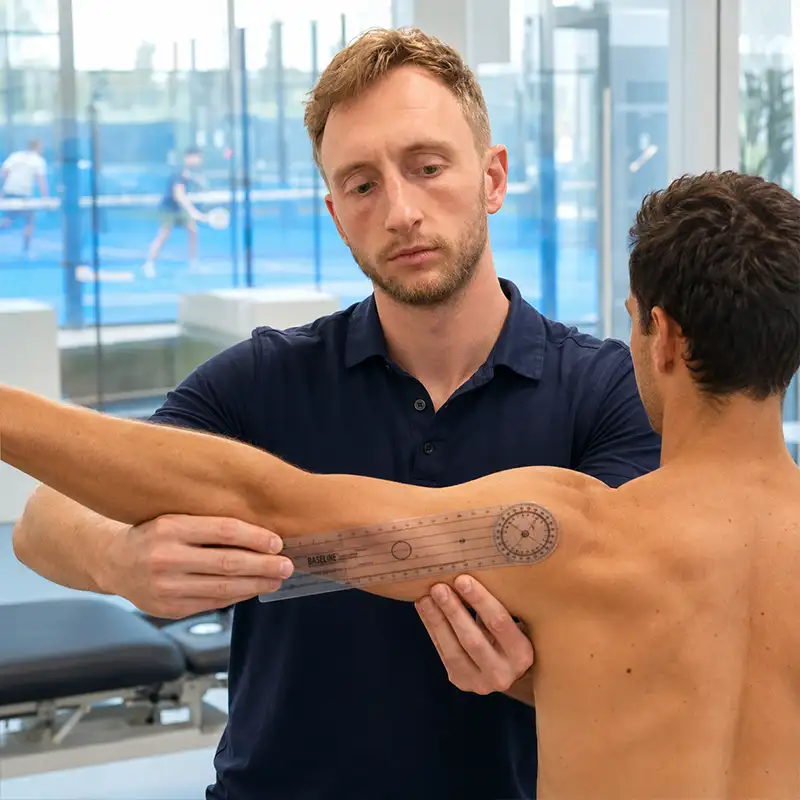
Sports physiotherapist David Ruth conducting a movement screening session at Dorset Sports Physio, Advantage Padel, Christchurch

Performance and injury prevention services at Dorset Sports Physio help racquet sport players reduce injury risk and improve on-court performance through structured movement screening, individual strength programmes and sport-specific conditioning. The service is based at Advantage Padel in Mudeford, Christchurch, and is delivered by David Ruth, a chartered sports physiotherapist who specialises in the physical demands of pickleball, padel and tennis.

The best time to see a physiotherapist is before you get injured. Most racquet sport injuries are not accidents – they are the predictable result of strength deficits, movement restrictions or sudden increases in how much you are playing. A movement screening appointment identifies those risk factors specifically in your body, before they cause a problem that takes you off court.

Benefits of performance training and screening

Racquet sports place asymmetric, repetitive demands on the body: explosive lateral lunges, rapid overhead swings and thousands of deceleration steps across a season. Players whose bodies are conditioned for those demands play better and get injured less. This service bridges the gap between general fitness and sport-specific durability.
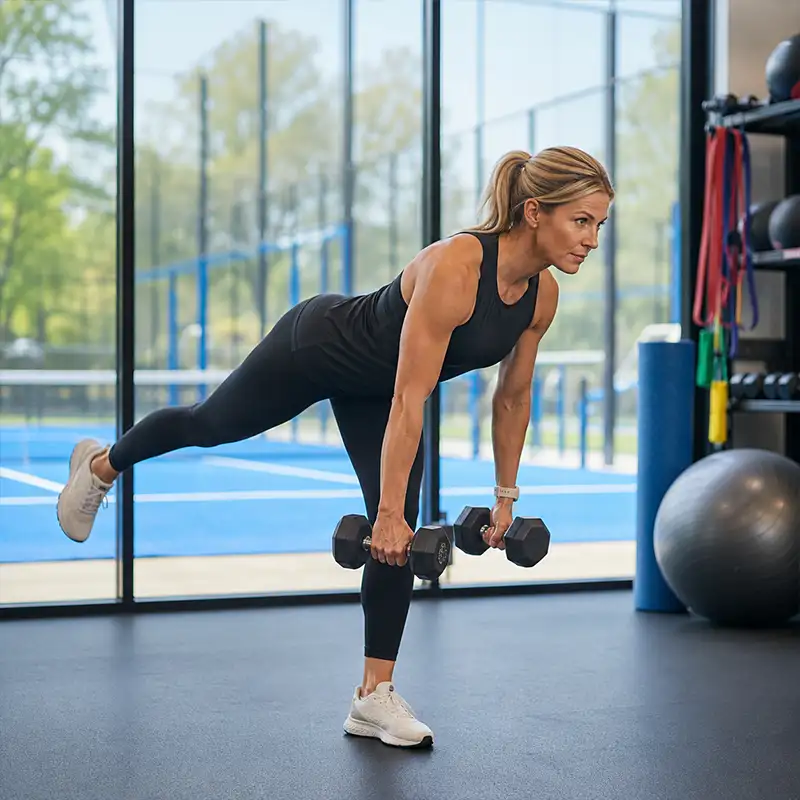
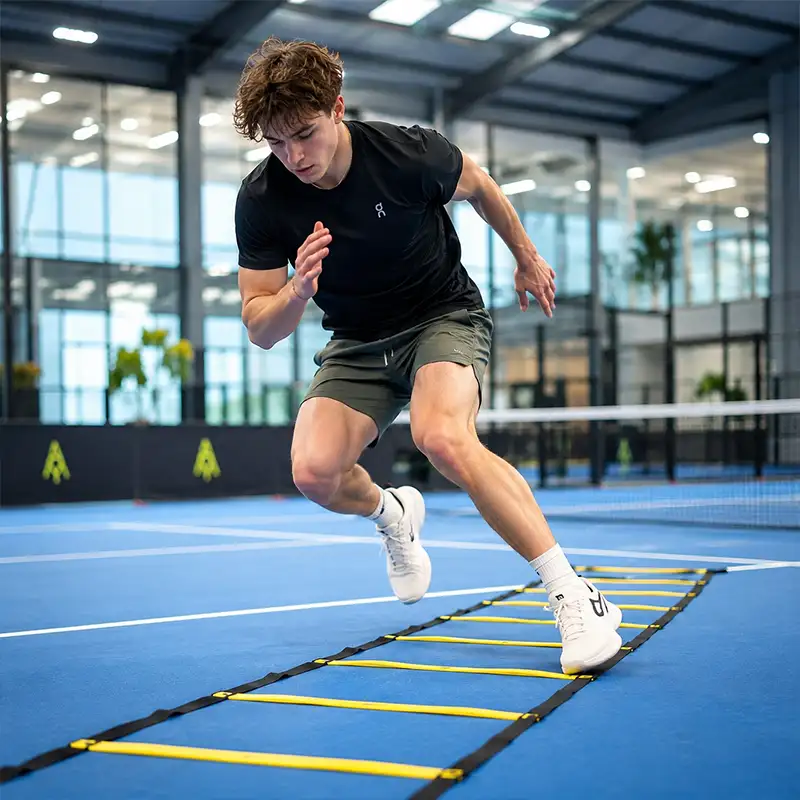
Performance training for a racquet sport player at Advantage Padel, Christchurch, Dorset

Know your weak links before they break

A movement and strength screening identifies the specific deficits most likely to cause injury in your sport – rotator cuff weakness, hip stiffness, calf resilience – so you can address them proactively.

Performance that transfers to court

The strength and movement qualities that protect you from injury – explosive leg power, rotational control, shoulder stability – are the same ones that make you faster and more consistent on court.

Stay available for the whole season

Players who follow structured conditioning programmes miss fewer matches through injury. Prevention is not just good for your health – it is good for your game.
This service is particularly valuable for players over 40, anyone ramping up their match volume, or players with a history of recurring injuries such as tennis elbow or calf strains.

What's included

Each component of the performance service is designed to address the specific physical demands of racquet sports. Screenings, programmes and plans can be delivered individually or as a combined package.

Movement Screening

Racquet sport injury risk screening assessment at Dorset Sports Physio, Christchurch
Court conditioning and agility training for pickleball and padel players at Advantage Padel

Court Conditioning

Strength Programming

Strength and conditioning programming for racquet sport players at Dorset Sports Physio
David Ruth, sports physiotherapist and pickleball coach, founder of Dorset Sports Physio at Advantage Padel, Christchurch
Already rehabbed an injury elsewhere and not quite back to full speed?
Book a Return-to-Performance Assessment

Frequently asked questions

Everything you need to know about getting screened, getting stronger and staying on court.
Q1. What is a racquet sport injury screening?
A racquet sport injury screening is a one-hour assessment of your strength, mobility and movement patterns, carried out by sports physiotherapist David Ruth. It identifies your individual risk factors for the most common racquet sport injuries and produces a written report with a personalised exercise plan to address them.
An effective racquet sport warm-up takes around 8 to 10 minutes and includes a pulse raiser, dynamic mobility work for hips, thoracic spine and shoulders, calf and rotator cuff activation exercises, and progressive shadow swings or footwork drills before live play. A full routine is available in the injury resources section.
Yes. The physical qualities that reduce injury risk – lower-limb power, rotational strength, shoulder stability and movement efficiency – are the same qualities that make you faster around the court, more consistent under pressure and more powerful in your shots. The training is sport-specific, not generic gym work.
Yes, and it is specifically designed for this situation. Many athletes come out of physiotherapy rehabilitation pain-free but not yet match-ready. The return-to-performance service bridges that gap with structured, progressive court-based conditioning to get you back to full competitive level safely.
Performance screening and training is particularly valuable for: players over 40 who want to compete without recurring injuries; club and league players increasing their match volume; anyone with a history of overuse injuries such as tennis elbow, calf strains or shoulder pain; and new racquet sport players whose bodies have not yet adapted to the demands of the game.